


The NCB said a Syrian suspect led investigators to a Dehradun factory allegedly used to make Captagon. The raid under Operation RAZEPILL led to a 227.2 kg seizure, two arrests and a wider probe.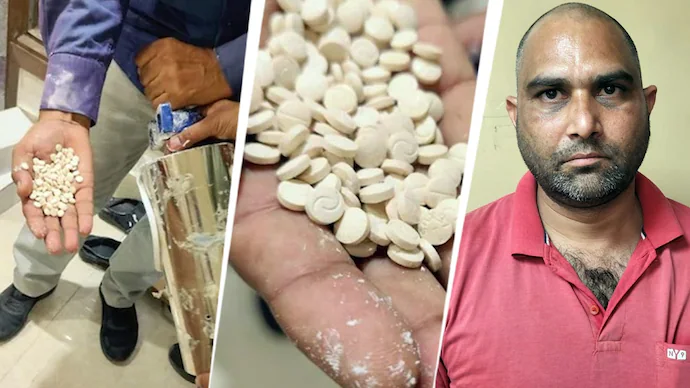
The Narcotics Control Bureau has busted an alleged international Captagon or the ‘Jihadi drug’ manufacturing network under a major crackdown codenamed Operation RAZEPILL, seizing 227.2 kg of Captagon tablets and powder and arresting two people, including a Syrian national, officials said.
According to investigators, the Syrian accused revealed during interrogation that the Captagon pills recovered earlier from Neb Sarai in New Delhi had been illegally manufactured at a factory in Dehradun, Uttarakhand, in November 2025 with the help of another Syrian accomplice.
Acting on the disclosures, NCB officials carried out a late-night raid on May 16 at the premises of M/s Green Herbal in Dehradun. During the search operation, officials discovered sophisticated machinery allegedly being used for large-scale illicit drug production, including tablet-making, granulation, capsule-filling, coating, sealing and blister packaging machines.
Authorities also recovered raw materials, chemicals, capsules and packaging material from the factory premises.
Investigators alleged that the factory owner had rented out the facility for illegal drug manufacturing and charged around Rs 50,000 per day for its use. Officials further said the factory owner had previously been linked to two separate narcotics cases involving the supply of Tramadol and other prescription tablets, investigated by Dehradun Police and the NCB Delhi zonal unit.
The factory owner has now been arrested and produced before a magistrate. Officials confirmed that two people have been arrested so far in connection with the case, while further investigation is underway to identify additional links in the network.
What Is Captagon or ‘Jihadi Drug’
The seizure has drawn particular attention because of the nature of the drug involved. Captagon, often referred to as the “jihadi drug” or the “poor man’s cocaine”, is a highly addictive stimulant that has frequently surfaced in conflict zones across Syria and the Middle East.
The drug gained notoriety during the Syrian civil war after reports suggested that Islamic State fighters used it to stay awake for extended periods, suppress fear and remain active during combat.
Originally developed in the 1960s under the name Fenethylline to treat attention disorders and narcolepsy, Captagon was later banned in several countries due to its addictive properties. The drug is now listed under Schedule II of the United Nations Convention on Psychotropic Substances.
