
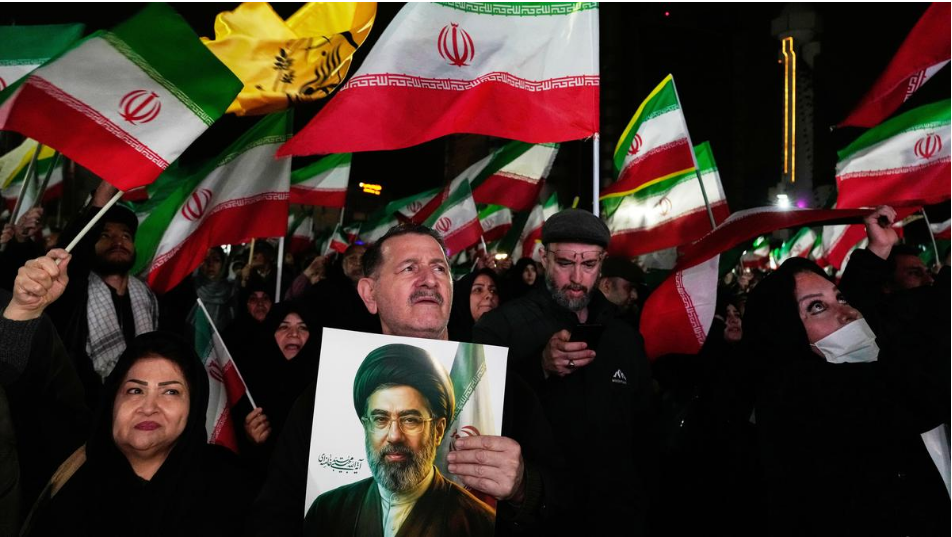
Amid rising tensions, U.S. President Donald Trump claimed that Iran is quietly engaging in peace negotiations, despite publicly denying it. Speaking at a dinner with Republican lawmakers, Trump suggested that Iranian officials are hesitant to acknowledge the talks due to fears for their safety from internal factions, as well as potential threats from the United States.
The White House has also issued a stern warning to Tehran, cautioning against rejecting any potential agreement to end the conflict. Press Secretary Karoline Leavitt stated that if Iran fails to accept the current situation, it could face unprecedented military consequences. She emphasized that the U.S. administration is prepared to take decisive action if necessary, while also confirming that diplomatic discussions are still ongoing.
On the other hand, Iran has firmly dismissed the claims of negotiations. Iranian Foreign Minister Abbas Araghchi stated that Tehran has no intention of entering into talks at this stage. He reiterated that Iran’s current strategy is to continue its resistance and described the U.S. push for negotiations as a sign of weakness.
Araghchi further asserted that Iran seeks to end the conflict on its own terms, ensuring that such a situation does not arise again in the future. According to Iranian sources, Tehran has laid out specific conditions for a ceasefire.
These reported conditions include strong guarantees that neither Israel nor the United States would restart hostilities, along with compensation for damages caused during the conflict. Iran is also demanding a complete halt to military actions across the region, including those involving allied groups such as Hezbollah.
Additionally, Tehran is seeking international recognition of its sovereignty, particularly over strategic areas like the Strait of Hormuz, which remains a critical global energy route.
As the situation continues to evolve, the possibility of further escalation remains high, even as diplomatic channels appear to remain partially open.
